
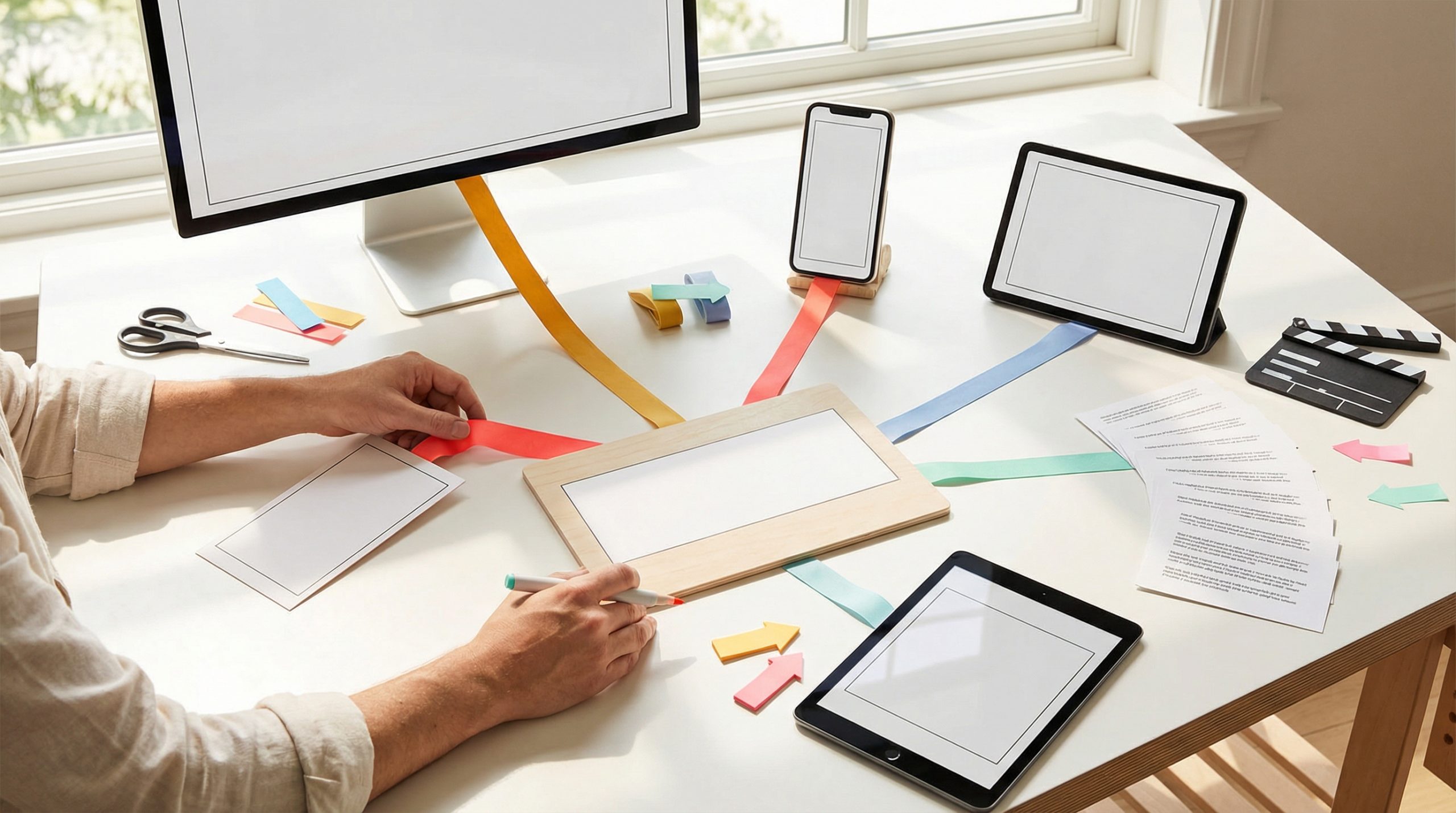
In 2026, the cost of human-led video production has made AI-driven creative the default choice for performance marketing. However, paid social is an unforgiving environment. While organic content might be forgiven for a slightly off-center text box, an ad with "dead zones" or improper aspect ratios is a direct waste of your budget.
To maximize your Return on Ad Spend (ROAS), you must move beyond generic video sizes and master the specific technical constraints of paid media across Meta and TikTok.
Meta Ads: Facebook & Instagram (2026 Standards)
Meta remains the most complex ecosystem for ad delivery because of its varied placements. In 2026, the "Gold Standard" for Meta ads has shifted almost entirely away from square (1:1) video in favor of immersive, screen-filling formats.
- Facebook & Instagram Reels Ads: 1080 x 1920 pixels (9:16). This is the highest-converting format for mobile users, as it takes up 100% of the screen.
- In-Feed Video Ads: 1080 x 1350 pixels (4:5). This format is preferred for feed-based campaigns because it offers 70% more real estate than a square video, driving higher engagement.
- Facebook Stories: 1080 x 1920 pixels (9:16). For paid stories, you are capped at 60 seconds per individual ad unit.
What is Meta’s "Ad Safe Zone"?
The biggest technical failure in 2026 ad creative is the "UI Overlap". When you run a video as an ad, the platform overlays a "Sponsored" tag, a call-to-action (CTA) button, and the account name directly over your footage.
- Vertical Ads (9:16): You must keep all essential branding, text, and faces within the center 1080 x 1440 area.
- The Bottom Clearance: Avoid placing any critical information in the bottom 450 pixels of a Reel ad, as this is where the CTA button and caption will be anchored.
- The Top Clearance: Keep the top 220 pixels clear of text to ensure the "Sponsored" label and profile icon do not obscure your messaging.
By adhering to these "Safe Zones," you ensure that your AI-generated characters and product shots are fully visible, regardless of the user's device settings.
TikTok Ads
TikTok ads in 2026 are strictly vertical-first, and any attempt to run letterboxed or horizontal content results in significantly lower ROAS. Because the TikTok algorithm favors native-feeling content, your AI-generated ads must mimic the aesthetic of an organic post.
- Optimal Size: 1080 x 1920 pixels (9:16).
- Max File Size: 1GB for manual uploads, though 500MB is recommended to ensure fast processing through the TikTok Ad Manager.
- TikTok Safe Zone: Keep text and essential visuals centered within the 1080 x 1440 area to avoid being covered by the username, caption, and side buttons.
- Audio Requirement: Unlike LinkedIn, TikTok is a "sound-on" platform; ads without high-quality audio or trending soundscapes see a massive drop in completion rates.
Self-Certifying AI Ads
As the industry matures, platforms have introduced strict disclosure requirements for paid media that uses synthetic elements. Failing to follow these rules in 2026 can lead to immediate ad rejection or account suspension.
- The "Altered Content" Label: When uploading an ad created with an AI generator, you must check the "Altered Content" box in the ad manager. This is required if the content depicts real people, places, or events that did not actually occur.
- The Self-Certification Trap: If you consistently fail to disclose AI-generated content in your paid campaigns, platforms will downgrade your account's "accuracy rating," potentially leading to manual review delays for all future ads.
- Advertiser-Friendly Review: Before scaling your budget, you must scrub your AI video frame-by-frame. Even a single "hallucinated" frame—such as a character with extra limbs or a melting face—can trigger a "Shocking Content" flag, leading to the dreaded yellow dollar sign or a complete ad block.
Optimizing for 2026 Ad Algorithms
Successful paid social in 2026 isn't just about the specs; it's about the data signals you send to the algorithm.
- The 3-Second Hook: In the paid feed, you have less than three seconds to stop the scroll. Use a striking visual pattern interrupt, such as a high-fidelity cartoon video generator intro, to grab attention.
- Visual Continuity: Use ai consistency tools to ensure that if a user clicks from an ad to your profile, the characters they see in the organic feed match the ones from the paid campaign. This builds the "Brand Trust" required to drive a conversion.
- A/B Testing AI Hooks: Because AI allows for rapid production, you should generate multiple versions of your ad's first three seconds to test which "hook" yields the lowest cost-per-click (CPC).
Mastering the Social Ad Landscape in 2026
Navigating the technical and regulatory requirements of 2026 paid social is the difference between a successful product launch and a wasted investment. By mastering "Safe Zones," strictly adhering to transparency labels, and optimizing for the 3-second hook, you can leverage the power of AI to out-produce and out-perform traditional competitors.
Sources and Tools for Platform Optimization
- YouTube Video Resolution & Aspect Ratios: The official guide for maintaining "Elite" status through proper formatting.
- TikTok Creative Center: Real-time data on trending vertical formats and technical requirements.
- YouTube Create App: A free mobile suite designed for high-speed assembly of vertical and horizontal content.
- Aspect Ratio Calculator: A vital tool for ensuring your AI generator output matches platform-specific pixels exactly.